


Spider veins are engorged raised blood vessels that twist and turn near the skin. These pesky vessels affect up to 80% of individuals and are found in both males and females. Spider veins remain one of the most common cosmetic maladies world-wide. Patients with spider veins often exhibit symptoms ranging from little or no discomfort to significant pain, swelling, and even open sores. Proper diagnosis and a well established plan of care is essential in order to ensure long term success of treatment. While these vessels may prove pesky, experienced care can often result in significant improvement. In order to introduce you and our patients to the essentials of spider vein care I will aim to answer several of the most frequently asked questions I receive regarding spider veins.
Who do I see for treatment of my spider veins?
Sclerotherapy is procedure that is practice by practitioners ranging from Vascular surgeons to Nurses like myself. Superficial vessels can often be treated via laser or injectable techniques while larger vessels more deep in the skin may require referral to a surgeon. The best way to begin treatment for Spider veins is by scheduling an Initial consultation for Sclerotherapy. This consultation will include a detailed medical history and physical exam to assess the presence of spider or varicose veins in addition to any subjective symptoms which may include: burning, stinging, aching, itching, swelling, feelings of fullness, fatigue, or restless legs. Any suspicion of a more complex venous condition may require more high tech evaluations with techniques such as a venous doppler by a vascular surgeon. Superficial, benign spider veins are easily treated in an office setting with sclerotherapy.
How is Sclerotherapy performed?
Sclerotherapy involves using a tiny needle to inject a solution into the unwanted spider vein. The vein wall then becomes damaged which causes the body to reabsorb the affected vessel, similar to the manner in which it reabsorbs a bruise.
Is Sclerotherapy Painful?
Minimal discomfort is felt during a sclerotherapy session, with many patients stating they do not even feel the tiny needle sticks. Minor itching of the treatment site may be noted for 10-15 minutes post-procedure and bruising is possible, typically resolving in 10-14 days.
How long will it take my varicose veins to go away?
Improvement in the number and severity of undesirable veins is noted in as few as 3 weeks with subsequent improvement noted with serial sessions; the average patient requires 3-5 treatments performed every 4-6 weeks. Requiring absolutely no down-time, sclerotherapy may even be performed during a lunch break.
Spider Vein Pictures: Before and After

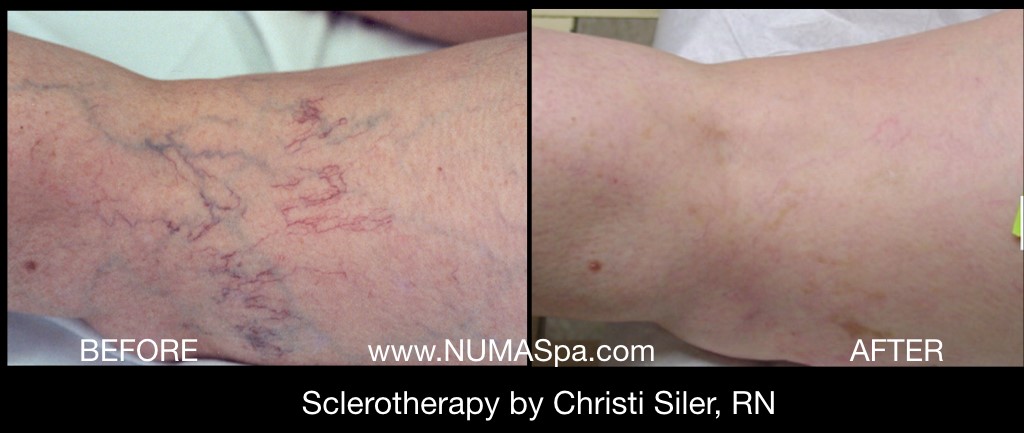
*Results May Vary
Thank you so much for taking the time to read our introductory article on Sclerotherapy. I have been practicing these techniques for years now and truly enjoy the art of Sclerotherapy and helping our wonderful patients get rid of their unwanted veins!
Christi Siler, RN
Sclerotherapist and Aesthetic Nurse Injector
NUMA Spa, Newport News, Va
Please feel free to send me any questions at Christi@NumaSpa.com
Contact Us
Blog
By submitting this form, I consent to be contacted by Numa Spa via phone, text, email, or mail. Message and data rates may apply. Consent is not a condition of purchase. I agree to the Terms of Service and acknowledge the Privacy Policy. Reply STOP to opt out.
Disclaimer
By submitting this form you agree to be contacted by Numa Spa and receive marketing messages by phone, text, or email. You can unsubscribe from these communications at any time. We commit to protecting and respecting your privacy. For more information, please review our Privacy Policy.
*Before and after images reflect actual patient results. Although individual results may vary, treatment is only promised to provide permanent results. A guarantee is neither provided nor implied. Statements estimating treatment duration and the number of treatments required are based on the typical experience of our patients. However, individual experiences may vary.